
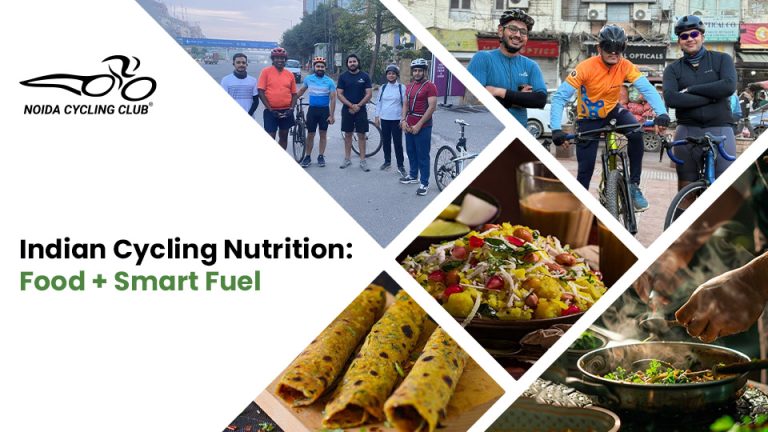
Cycling nutrition advice online often assumes everyone is training like a professional athlete in Europe—structured plans, precise fuelling, and a heavy reliance on sports nutrition products. Energy gels, protein bars, electrolyte powders, and recovery drinks dominate the conversation. But for most riders in India, especially those riding with communities like Noida Cycling Club, nutrition is usually more blended, combining everyday home food with targeted supplementation when needed.
Our rides start early, often after a quick homemade breakfast. We ride through heat, humidity, traffic lights, and the occasional chai stop. Our nutrition reflects this lifestyle: rooted in everyday food, while increasingly supported by smart supplementation.
The good news is that many traditional Indian foods already work extremely well for cycling. At the same time, as rides become longer, hotter, or more structured, supplements play a valuable role in supporting hydration, endurance, and recovery.
Take poha, for example. It is one of the most practical pre-ride meals an Indian cyclist can have—light, easy to digest, and rich in carbohydrates that provide steady energy. Many cyclists pair it with a banana, which works as a quick energy source while also providing potassium to support muscle function.
Some riders prefer something more filling, like a simple paratha with curd, especially before longer weekend rides. The key is balance: a lightly cooked paratha provides sustained energy, while excess oil can feel heavy. And then there’s masala chai—a ritual for many early riders. Moderate caffeine can improve alertness and performance, making a small cup before a ride perfectly reasonable.
As rides extend beyond 60–90 minutes, the body needs a steady supply of energy and fluids. Indian riders often rely on accessible options like bananas, dates, and peanut chikki during breaks. These foods work well because they combine quick-release carbohydrates with some sustained energy.
During longer rides or in hotter conditions, hydration becomes more critical. This is where supplements become especially useful. Electrolyte formulations help replenish essential minerals like sodium, potassium, magnesium, and calcium lost through sweat. In conditions like NCR summers or high-intensity sessions, they can significantly improve hydration compared to water alone.
The post-ride phase is where recovery truly begins. After expending energy, the body needs carbohydrates to refuel and protein to repair muscles. Everyday meals like dal and rice or curd with paratha provide an excellent foundation. In hot weather, coconut water can support rehydration.
For riders training more frequently or at higher intensities, recovery supplements can further support muscle repair and reduce fatigue. When combined with balanced meals, they help the body recover more efficiently and prepare for the next session.
Cycling nutrition in India doesn’t need to choose between traditional food and modern supplements. The most effective approach is combining both.
Daily food builds the foundation—providing consistent energy, nourishment, and balance. Supplements enhance performance—supporting hydration, endurance, and recovery.
For riders in communities like Noida Cycling Club, the takeaway is simple: eat well, stay consistent, hydrate properly, and use supplements strategically as your training evolves. And if your ride includes a chai stop and a shared snack along the way—that’s not a compromise. That’s part of what makes cycling here uniquely sustainable.